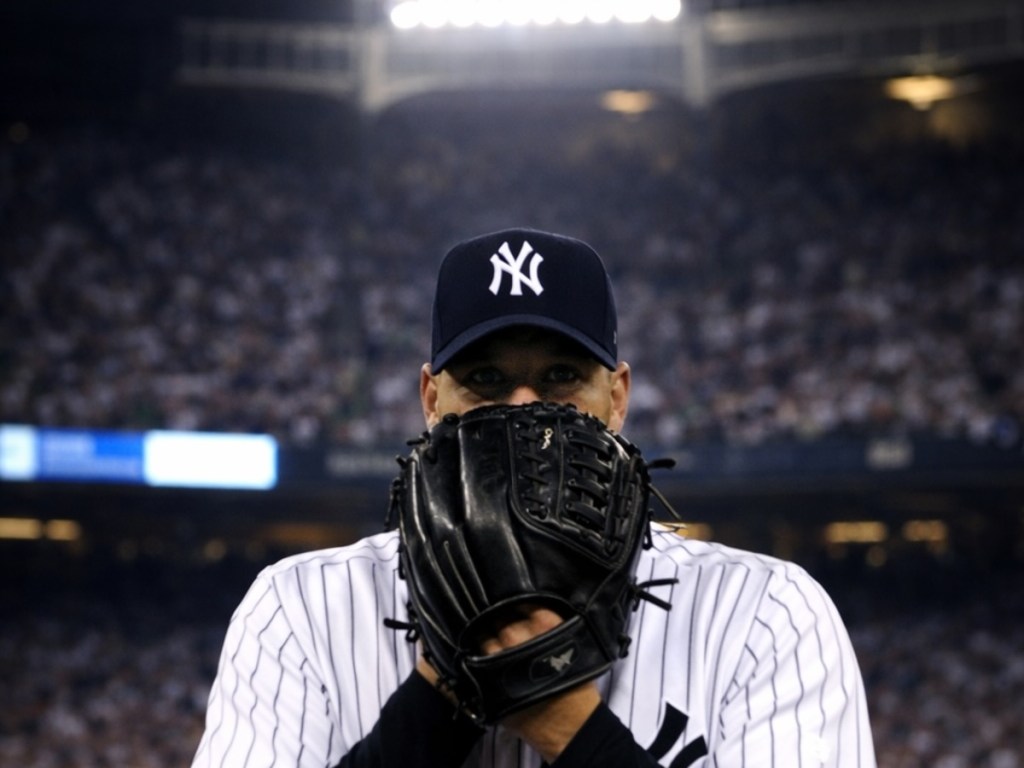
And yes, this is written by a biased lifelong Yankees fan… But bias does not create October dominance, and nostalgia does not manufacture big outs in big moments. Andy Pettitte’s Hall of Fame case is not built on sentiment or pinstripes alone. It is built on a career that repeatedly bent the sport’s biggest stages to his will.
Pettitte never looked like a legend in the mirror. He did not throw 100. He did not stalk the mound with theatrical fury. What he did was take the ball when it mattered and turn playoff chaos into routine. In a sport obsessed with velocity and spin rates, Pettitte made a living on something far less measurable and far more valuable: control of the moment.
October is where pitchers are separated from throwers. Pettitte owns that month in a way few ever have. He still holds the records for most postseason wins and innings pitched, not because he played forever, but because managers trusted him when trust was the rarest currency in baseball. When the season narrowed and the margins vanished, Pettitte was the one walking to the mound while everyone else held their breath.
He was never the ace in the marketing sense, but he was often the ace in reality. On teams loaded with stars and future Hall of Famers, Pettitte was the one asked to stop momentum, to silence crowds, to flip series. His value was not isolated to dominant stretches but spread across two decades of relevance, from the dynasty years to a late career renaissance that saw him still carving lineups when most pitchers his age were long retired.
Critics point to the lack of a Cy Young Award, as if hardware is the sole measure of greatness. Pettitte finished high in Cy Young voting multiple times in an era stacked with inner circle arms. He pitched in the American League during the height of the steroid era, when run environments were inflated and hitters were terrifying. He did not just survive that era. He thrived in it.
Then there is the uncomfortable part of the conversation, the HGH admission. It matters. It should be acknowledged. But it should not be weaponized into erasing a career built on craft, competitiveness, and consistency. Pettitte admitted his mistake, owned it publicly, and returned to the mound without excuses or bravado. Baseball history is not a morality play. It is a record of what happened on the field, and on the field Pettitte delivered.
What made him special was not dominance in short bursts but reliability across seasons, roles, and teams. He was just as vital in Houston as he was in New York, proving his success was not a byproduct of pinstripes or payroll. He adjusted as his stuff aged, leaned harder into location and intelligence, and kept winning games long after his peers faded.
The Hall of Fame is not meant only for the mythic figures who tower statistically over their peers. It is also meant for players who defined eras through presence, performance, and consequence. Pettitte did all three. His career is woven into the fabric of modern baseball’s most important moments, and removing him from Cooperstown leaves a hole that no plaque can fully explain away.
Andy Pettitte’s case is not about whether he was the best pitcher of his generation. It is about whether he was essential to it. The answer is obvious to anyone who watched October baseball over the last twenty years. Some players shape box scores. Others shape history. Pettitte did both, quietly, relentlessly, and often when it mattered most.

 ktomp_ny
Leave a comment